“Look what I made!” Your child holds up a drawing while you finish one more message. You glance over, say “Lovely,” and carry on. Most of us have had that moment.
Here’s a simple reset: put the phone down, turn toward them, and ask about one detail. “Tell me about this blue part.” You now have something to share, even if you only have a little time.
These 11 small ways to make your child feel seen fit into ordinary days: school mornings, snack breaks, bedtime, and the slightly chaotic hour when everyone wants something at once. Each one gives you a practical action and words you can try today. Start with one that feels manageable.
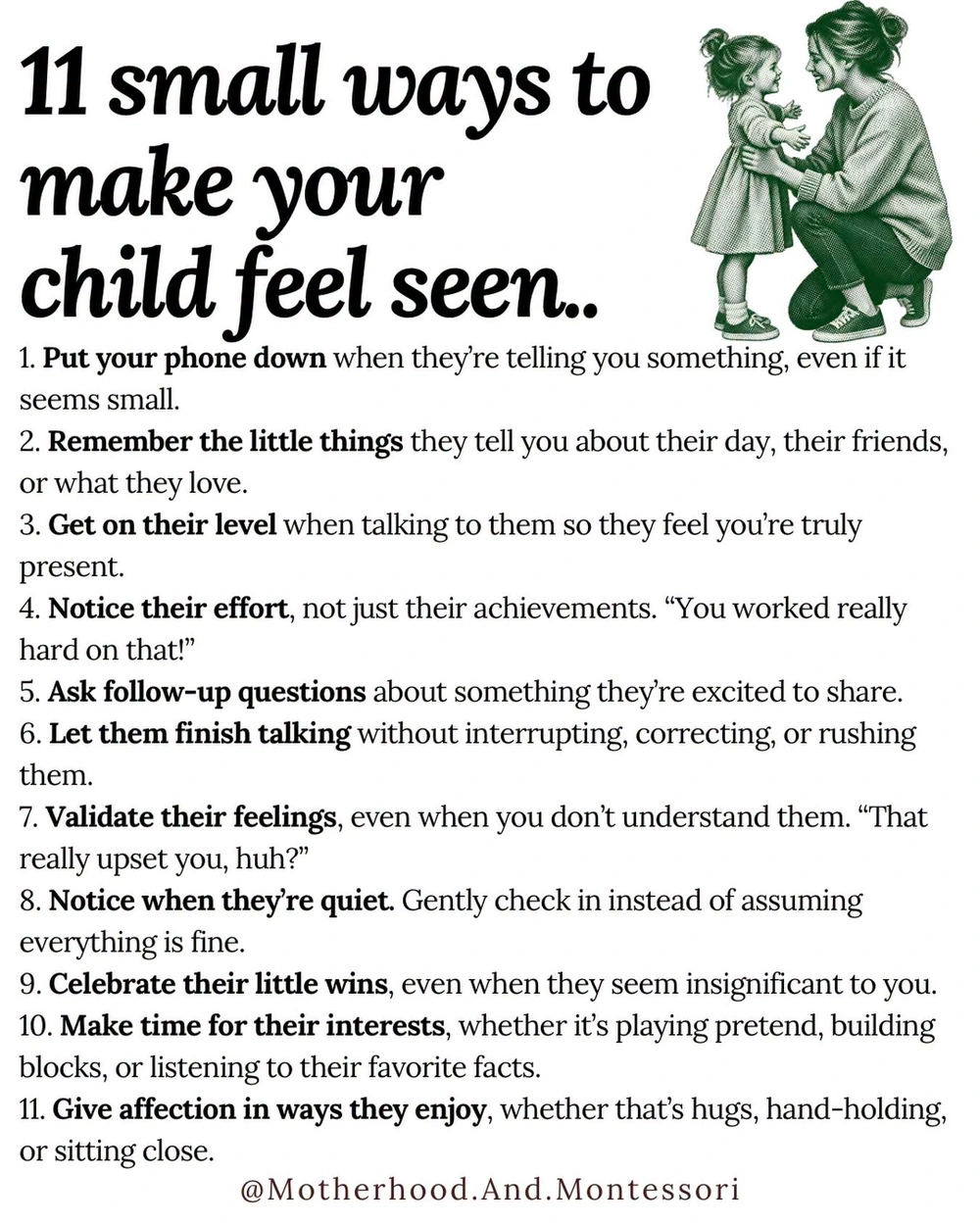
What Does It Mean to Help Your Child Feel Seen?
Think of it as making room for who your child is right now: their interests, effort, thoughts, and feelings. You show that attention through small actions, such as remembering a friend’s name or listening to the end of a story.
You can care about their feelings while keeping a limit. “You really wanted more screen time, and stopping feels frustrating. We’re still putting the tablet away.” The feeling gets your attention; the rule stays clear.
You also get to have limits. If you cannot listen immediately, tell your child when you can return to the conversation, then follow through. A parent who sometimes says “I need a minute” can still make plenty of room for connection.
1. Pause Your Phone and Give Them a Clear Moment of Attention
A quick glance can look like listening from your side and feel unfinished from theirs. When your child starts telling you something, try creating a small pause you both recognize.
Put the phone face down, turn toward them, and let your hands rest for a moment. If you need to finish a task first, say so plainly and offer a realistic next step.
Try saying: “I’m finishing this message. Then I’ll put my phone away and hear your story.”
When you return, mention what they wanted to share: “You were going to tell me about the playground.” That makes the return feel specific.
Make it easier today: Choose one ordinary moment for focused attention, such as the first conversation after school or a bedtime check-in. Keep the phone somewhere you will not keep reaching for it.
You do not have to monitor every sentence your child says all day. Give a conversation your attention when you can, and make a clear promise when you need to come back.
2. Remember One Detail and Bring It Up Later
Children can tell you a lot in a short time: a friend’s new lunchbox, a tricky puzzle, a game they invented. Pick one detail and ask about it later.
“Did you get another turn on the climbing frame?” feels different from the automatic “How was your day?” It gives your child a starting point and shows that you kept track of something they mentioned.
Try saying: “Yesterday you said your class was building a paper bridge. What happened with yours?”
For a younger child, bring up the toy or pretend game they enjoyed. For an older child, ask about a project or interest without requesting a full report.
Make it easier today: Remember just one thing. If names blur together by dinner, keep a short private note. You already write reminders for groceries; remembering the name of a very important stuffed rabbit can join the list.
Let them update you if their interests change. Last month’s favorite dinosaur may already have lost its job.
3. Make Conversation Comfortable at Their Height
For a small child, try sitting beside them or lowering yourself closer to their height when it feels comfortable. You can talk on the floor, sit together on a step, or pull up a chair.
Leave enough space for them to move and choose how they face you. Some children talk more easily while drawing, walking, or sitting side by side. They do not need to hold eye contact to show that they hear you.
Try saying: “I’m going to sit here with you. Show me what happened.”
With an older child, a relaxed conversation during a shared activity may feel easier than a formal face-to-face talk. Follow their comfort rather than turning the moment into a staring contest.
Make it easier today: Sit down for one short conversation instead of speaking across the room. Put yourself where you can hear their voice without making them repeat every sentence.
The useful part is your availability. Choose a position that works for both of you.
4. Describe the Effort You Actually Notice
You can acknowledge a child’s work before you know how it will turn out. Notice the way they tried again, changed an approach, or stayed with a difficult task.
Try saying: “The pieces kept falling over, and you tried a wider base.”
That gives your child a clear description of what caught your attention. Keep it honest and proportionate. You can admire an attempt without calling every drawing a masterpiece or every small task extraordinary.
The American Academy of Pediatrics’ guidance on shaping young children’s behavior recommends noticing specific behavior and acknowledging real effort.
Make it easier today: Replace one automatic “Good job” with a detail: “You checked both sides before crossing,” or “You kept practicing that letter.”
You can also ask, “How do you feel about what you made?” Leave room for their own opinion. Your attention should not require them to feel proud on command.
5. Ask One Curious Follow-Up Question
When your child shares something, choose one part you genuinely want to understand. Ask about that part and wait for the answer.
If they show you a drawing, ask who lives in the tiny house. If they tell you about a game, ask what happens next. If they describe a school project, ask which part they enjoyed.
Try saying: “What made you choose that idea?”
Keep the questions light. A string of who, what, when, why, and how can make a casual chat feel like homework with no snack break.
You can make a simple observation instead: “That looks like a very busy spaceship.” Your child may take the conversation from there.
Make it easier today: Try one follow-up, then give them time. If they answer briefly, accept the brief answer. Curiosity works best when it leaves them room to decide how much they want to share.
6. Let the Story Reach Its Ending
A child’s story can take the scenic route. You may hear the same detail twice, discover three supporting characters, and still wonder where the sentence is going.
When you have the time, let them finish before you correct a small detail or offer a solution. A pause gives you a chance to understand what mattered to them.
Try saying: “I’m listening. What happened after that?”
If you interrupt, you can restart simply: “I jumped in. You were telling me about the game—go on.” You do not need to turn the correction into a long apology.
Make it easier today: Wait one extra beat after they stop talking. They may still be finding the next words.
If you need to act immediately for safety, interrupt clearly. For ordinary conversation, give yourself permission to hear the ending before deciding what your response should be.
7. Acknowledge the Feeling Before Offering a Fix
A broken biscuit may seem minor to you and disappointing to a young child. Start with the feeling you can see, and leave room for them to correct your guess.
Try saying: “You wanted it to stay whole. You look disappointed.”
Or ask, “Was that frustrating, or did something else happen?” You do not need to get the exact word right on the first attempt.
The CDC’s emotion-coaching guidance for toddlers and preschoolers encourages caregivers to notice and name feelings. The practical examples here offer ways to try that idea in everyday conversation.
When you need a boundary, put it beside the acknowledgment: “You’re upset that playtime ended. I won’t let you hit. I’m here while you calm down.”
Make it easier today: Try one sentence about the feeling before you explain, distract, or suggest what to do next.
With an older child, you can ask, “Would you like help, or would you like me to listen?” Sometimes you will still need to step in, but the question gives them a voice in the conversation.
8. Offer a Gentle Check-In When They Seem Quiet
Quiet can mean plenty of things: tired, comfortable, thoughtful, or ready for a break. Try an open invitation rather than deciding what it means for your child.
Try saying: “You seem quiet today. Want some company, or a little space?”
If they say they are fine, you can accept the answer and stay available: “Okay. I’m around if you want to talk later.”
A shared snack, a short walk, or sitting nearby while they draw gives you another way to spend time together. They may talk, or they may enjoy the company without a conversation.
Make it easier today: Choose a calm moment for one check-in. Avoid asking the same question repeatedly or discussing their mood in front of other people.
Respecting a quiet moment can be part of paying attention, too. Give them room to have a day that does not come with a detailed explanation.
9. Notice the Small Win That Matters to Them
Children often know which moments felt big: joining a game, finishing a book, trying a new activity, or asking someone for help. Let them show you what they want to celebrate.
Try saying: “You’ve been looking forward to doing that. How did it feel?”
A smile, a high-five, or a few interested questions may be enough. Some children enjoy a big cheer; others prefer a quieter response. Follow the child in front of you.
Make it easier today: Notice something beyond grades, trophies, or finishing first. Pay attention to an act of kindness, a new skill, or an attempt they cared about.
Keep siblings out of the comparison. “You finally did it faster than your brother” can pull the conversation away from their experience.
If the next attempt goes badly, keep making room for them. You can say, “That one felt different. Want to tell me about it?” Your interest can stay steady across a good day and a difficult one.
10. Join Their Interest and Let Them Lead for a While
Your child may love something you would never choose for yourself. Spend a little time finding out what they enjoy about it.
Ask them to explain their drawing, choose a pretend-play role for you, or show you a favorite song. With an older child, you might listen to their game explanation or watch a short clip they want to share.
Try saying: “You know a lot about this. Show me where to start.”
The CDC’s child-led play guidance encourages regular time in which toddlers and preschoolers lead the activity while a caregiver participates attentively.
Make it easier today: Offer a manageable amount of time and stay with one activity. During that window, follow their idea rather than improving the design, organizing every toy, or turning the game into a quiz.
You can keep ordinary boundaries: “You can choose the game. The glitter needs to stay at the table.” Even pretend cafés have cleaning costs.
11. Offer Affection in a Way They Enjoy
Give your child choices about everyday affection. They might enjoy a cuddle, a high-five, sitting close, a bedtime story, or hearing something kind.
Try saying: “Would you like a hug, a high-five, or for me to sit beside you?”
If they do not want a hug, accept the answer warmly. You can say, “Okay. I’m happy to be here with you.” They do not need to provide physical affection to prove that they love someone.
Older children may prefer a private kind word or time together over a hug in front of friends. Ask rather than assuming their preference will stay the same forever.
Make it easier today: Offer a choice and follow their answer. Keep the invitation easy to decline.
Affection can also happen through an ordinary shared routine: reading together, making toast, or talking while you tidy. Choose a moment you both enjoy.
A Simple Plan for a Busy Day
Try this small routine once today:
- Pause: Set down your phone or tell your child when you can stop your task.
- Notice: Mention one detail in what they show or tell you.
- Listen: Let them answer without rushing to the next question.
- Return: Bring up that detail later if there is a natural moment.
For example, your child shows you a block tower while you make dinner. You say, “I need to turn the stove down, then I’ll come look.” When you join them, ask about the bridge. At bedtime, mention that you liked hearing how they built it.
You can repeat a routine like that in your own way. It does not need a special activity, a purchase, or a perfectly quiet house.
What to Say When You Miss the Moment
You will sometimes answer while distracted, interrupt a story, or snap after a long day. Come back with a clear acknowledgment and a manageable next step.
“You were trying to show me something, and I kept looking at my phone. I’m ready to look now, if you still want to show me.”
If you spoke sharply, own it: “I spoke too harshly. I’m sorry. Let me try again.” Keep your child’s role simple; they do not need to reassure you or make you feel better about it.
When you still need a break, say when you will return. Make the promise small enough to keep.
Questions Parents Often Ask
How can I make my child feel heard when I am busy?
Tell them when you can listen, then return as promised. In the time you have, focus on one detail, ask a follow-up, and let them answer. A clear short conversation can fit into an ordinary routine.
What if my child does not want to talk?
Offer company or space and respect the answer. Try a shared activity they enjoy. Keep the invitation open without making conversation a requirement.
Does acknowledging feelings mean letting my child do whatever they want?
You can recognize disappointment and keep a limit in the same conversation. Use clear words for both: “You wanted more time. We still need to leave.”
How do these ideas work with more than one child?
Give each child some individual attention when you can, even in a brief routine. Keep track of their separate interests and let siblings finish speaking without competing for the answer. If you need to take turns, explain the turn and follow through.
What is the easiest habit to start with?
Choose the one that fits a moment you already have. Try a phone-free check-in after school, one curious question at snack time, or a quiet bedtime conversation. Practice that habit before adding several more.
Choose One Small Moment Today
Start with a detail. Ask about the blue part of the drawing. Remember the friend’s name. Sit beside them while they explain the game.
Save this list for a busy day, and choose one idea you can use in your next conversation. A simple “Tell me about that” gives you a place to begin.
Further Reading
- CDC: active listening with young children
- CDC: noticing and naming emotions
- CDC: child-led play
- American Academy of Pediatrics: noticing specific behavior and effort
The CDC resources above focus on toddlers and preschoolers. The suggestions for older children are practical adaptations. The supplied infographic inspired the article; its visible creator credit reads @Motherhood.And.Montessori.
